U-Haul Car Trailer Rental Prices And Sizes: A Comprehensive Guide
Introduction: The Versatile Solution for Vehicle Transport
Moving a car can be a daunting task. Whether you're relocating across the country, purchasing a vehicle from out of state, or need to transport a non-operational car for repairs, the logistics can be complex and expensive. While professional auto transport services are an option, they can be costly. This is where U-Haul car trailers come into play, offering a more affordable and flexible solution for hauling your vehicle. U-Haul car trailers provide a reliable way to tow your car, truck, or SUV behind a compatible tow vehicle. This guide provides a comprehensive overview of U-Haul car trailer rental prices, sizes, types, requirements, and tips to help you make an informed decision and ensure a smooth and safe towing experience. Understanding the nuances of U-Haul car trailer rentals is essential for anyone considering this option, allowing you to budget accurately, choose the right equipment, and avoid potential pitfalls.
U-Haul Car Trailer Rental Prices And Sizes: A Comprehensive Guide
Understanding U-Haul Car Trailer Types and Sizes
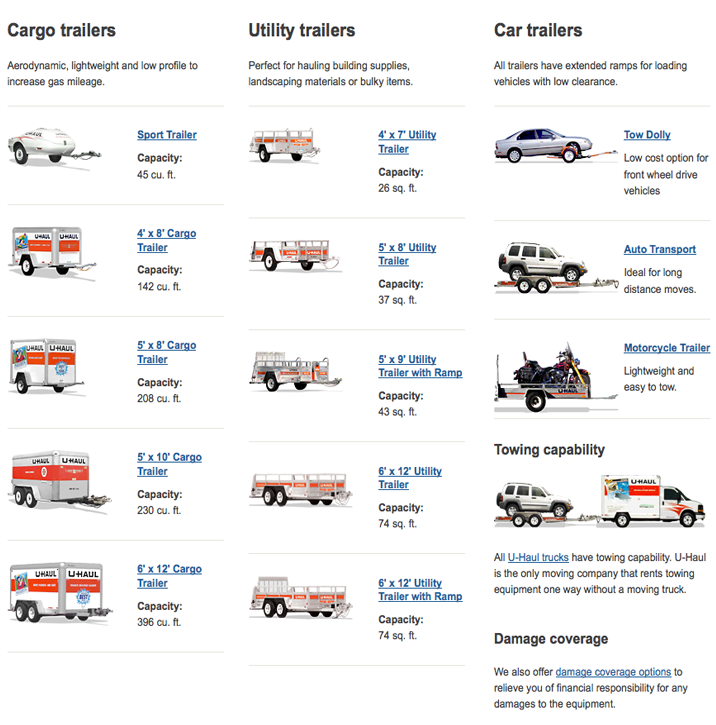
U-Haul offers primarily two types of car trailers designed for different needs and vehicle sizes: the Auto Transport and the Tow Dolly. Each has distinct characteristics affecting price, ease of use, and the types of vehicles they can accommodate.
- Auto Transport (Full Car Trailer): This is a flatbed trailer designed to carry all four wheels of your vehicle off the ground. It's the preferred option for longer distances, higher value vehicles, or when the towed vehicle has limitations (e.g., can't be towed with its wheels on the ground).
- Tow Dolly: This trailer tows the car with its front wheels off the ground and the rear wheels rolling. It's generally more affordable than the Auto Transport but is subject to more restrictions.
Understanding the specific dimensions and weight capacities of each trailer type is crucial for selecting the right one for your vehicle. Here's a more detailed breakdown:
| Feature | Auto Transport (Full Car Trailer) | Tow Dolly |
|---|---|---|
| Description | A flatbed trailer designed to carry all four wheels of a vehicle completely off the ground. | A trailer that tows a vehicle with its front wheels off the ground and the rear wheels rolling. |
| Best For | Longer distances, higher-value vehicles, vehicles with towing limitations, all-wheel-drive vehicles, vehicles where mileage accumulation is a concern. | Shorter distances, front-wheel-drive vehicles (generally), cost-conscious movers. |
| Weight Capacity | Typically around 5,290 lbs (trailer weight of 2,210 lbs and max load of 5,290 lbs, varies slightly). | Around 3,450 lbs (trailer weight of 750 lbs and max load of 3,450 lbs, varies slightly). |
| Size Dimensions | Deck Width: 7'8.5" (92.5"), Max Width: 7'9.75" (95.75"), Ramps: 9'3" (111"), Overall Width: 8'6" (102"), Empty Weight: 2,210 lbs (1,002 kg). | Deck Width: Varies slightly, but generally sufficient for most standard car widths. |
| Vehicle Limitations | Must meet weight and width requirements, low clearance vehicles may be difficult to load. | Typically suitable only for front-wheel-drive vehicles; rear-wheel-drive and all-wheel-drive vehicles usually cannot be towed with a tow dolly. |
| Pros | Safer for the towed vehicle, prevents mileage accumulation, suitable for a wider range of vehicles, less wear and tear on the towed vehicle. | Lower rental cost, lighter and easier to maneuver when unhitched. |
| Cons | Higher rental cost, heavier and more difficult to maneuver when unhitched, requires more space for storage. | Limited to front-wheel-drive vehicles (generally), accumulates mileage on rear wheels, may require disconnecting the driveshaft for some vehicles. |

U-Haul Car Trailer Rental Prices: Factors and Estimates
U-Haul car trailer rental prices are not fixed and vary depending on several factors:
- Distance: Local rentals (same pickup and drop-off location) are typically charged a flat daily rate. One-way rentals are priced based on the distance between the pickup and drop-off locations.
- Rental Duration: Daily rates apply for short-term rentals. Longer rentals (several days or weeks) may qualify for discounted rates.
- Location: Rental prices can vary based on the specific U-Haul location and regional demand. Metropolitan areas often have higher prices than rural areas.
- Trailer Type: As mentioned earlier, Auto Transports generally cost more to rent than Tow Dollies.
- Time of Year: Peak moving seasons (summer, end of the month) often see higher demand and, consequently, higher prices.
- Insurance: U-Haul offers optional insurance coverage for the trailer and the towed vehicle. Adding insurance will increase the overall rental cost.
Price Estimates:
It's difficult to provide exact rental prices without knowing your specific requirements. However, here are some approximate estimates:
- Tow Dolly (Local): \$49.95 per day (average)
- Auto Transport (Local): \$59.95 per day (average)
- One-Way Rentals: Can range from \$150 to \$1000+ depending on the distance.
Important Note: These are just estimates. The best way to get an accurate quote is to visit the U-Haul website or contact a local U-Haul location and provide your specific pickup and drop-off locations, rental dates, and trailer type preference.
How to Rent a U-Haul Car Trailer: A Step-by-Step Guide
Renting a U-Haul car trailer is a relatively straightforward process:
- Determine Your Needs: Identify the type of trailer you need (Auto Transport or Tow Dolly) based on your vehicle and towing requirements.
- Check Availability: Visit the U-Haul website (uhaul.com) or call a local U-Haul location to check the availability of the desired trailer at your preferred dates and locations.
- Make a Reservation: Reserving online or by phone is highly recommended, especially during peak seasons. You'll need to provide your pickup and drop-off locations, rental dates, personal information, and payment details.
- Review the Rental Agreement: Carefully read the rental agreement before signing. Pay attention to the terms and conditions, insurance options, mileage allowances (if applicable), and late return fees.
- Pick Up the Trailer: On the day of pickup, bring your driver's license, the tow vehicle, and the vehicle you'll be towing. The U-Haul representative will inspect your tow vehicle to ensure it meets the requirements.
- Inspect the Trailer: Before leaving the U-Haul location, thoroughly inspect the trailer for any damage. Note any existing damage on the rental agreement to avoid being charged for it later.
- Secure the Vehicles: Follow the U-Haul representative's instructions for properly loading and securing the vehicle onto the trailer. Ensure all straps and chains are tightened and secure.
- Return the Trailer: Return the trailer to the designated drop-off location on or before the agreed-upon return date.
Important Considerations and Requirements
Before renting a U-Haul car trailer, it's crucial to understand the following requirements and considerations:
- Tow Vehicle Requirements: Your tow vehicle must meet specific requirements regarding weight capacity, hitch type, and braking system. U-Haul will verify your tow vehicle's suitability before renting you a trailer. Common requirements include a Class III or IV hitch, a sufficient towing capacity rating, and working lights and brakes.
- Towed Vehicle Requirements: The vehicle being towed must also meet weight and size limitations. Check the U-Haul website or consult with a U-Haul representative to confirm that your vehicle is compatible with the chosen trailer.
- Driver's License: You must have a valid driver's license to rent a U-Haul trailer.
- Insurance: U-Haul offers optional insurance coverage for the trailer and the towed vehicle. While not mandatory, it's highly recommended to protect yourself from potential liability in case of an accident.
- Safety: Always prioritize safety when towing a vehicle. Drive at a safe speed, avoid sudden braking, and regularly check the straps and chains to ensure they remain secure.
Tips for a Smooth and Cost-Effective Rental
- Book in Advance: Reserving your trailer in advance, especially during peak season, can help you secure the trailer you need at the best possible price.
- Consider Off-Peak Times: If possible, schedule your move during off-peak times to potentially save money.
- Accurate Information: Provide accurate information about your vehicles and towing setup to avoid compatibility issues.
- Inspect Thoroughly: Carefully inspect the trailer and your tow vehicle before and after the rental.
- Drive Safely: Drive carefully and defensively, and be aware of the added length and weight of the trailer.
- Consider alternative tow options: It may be cheaper to pay a service to transport your car.
Potential Challenges and Solutions
- Availability: During peak seasons, trailers may be in short supply. Book in advance and be flexible with your dates.
- Tow Vehicle Incompatibility: Ensure your tow vehicle meets the requirements before making a reservation. If your vehicle is not suitable, consider renting a U-Haul truck with a tow hitch.
- Loading and Securing: Properly loading and securing the vehicle onto the trailer can be challenging. Watch U-Haul's instructional videos or ask for assistance from a U-Haul representative.
- Driving with a Trailer: Driving with a trailer requires practice and caution. Practice in a safe, open area before hitting the road.
Frequently Asked Questions (FAQ)
-
Q: Can I tow any car with a U-Haul car trailer?
- A: No. U-Haul car trailers have weight and size limitations. Check the U-Haul website or consult with a U-Haul representative to confirm compatibility.
-
Q: Do I need insurance to rent a U-Haul car trailer?
- A: Insurance is optional but highly recommended. U-Haul offers coverage for the trailer and the towed vehicle.
-
Q: What happens if I return the trailer late?
- A: You will be charged a late return fee. Check the rental agreement for details.
-
Q: Can I drop off the trailer at a different location than where I picked it up?
- A: Yes, but this is considered a one-way rental and will be priced accordingly.
-
Q: What if I damage the trailer?
- A: You will be responsible for the cost of repairs. Insurance can help cover these costs.
Conclusion: Making the Right Choice for Your Vehicle Transport Needs
U-Haul car trailers offer a convenient and cost-effective solution for transporting vehicles. By understanding the different trailer types, rental prices, requirements, and safety considerations, you can make an informed decision and ensure a smooth and successful towing experience. Remember to plan ahead, book in advance, inspect the equipment, and drive safely. Whether you're moving across town or across the country, U-Haul car trailers can help you get your vehicle where it needs to be.

