Unlocking Vehicle Value: How to Use NADA Values and Your VIN Number
Understanding the true value of a vehicle, whether you're buying, selling, or insuring, can be a complex process. Fortunately, resources like the National Automobile Dealers Association (NADA) and your Vehicle Identification Number (VIN) provide powerful tools for navigating this landscape. This article will serve as a comprehensive guide to understanding NADA values and how leveraging your VIN number can provide accurate and reliable vehicle valuation. We'll explore the intricacies of NADA, the importance of your VIN, and how to combine them for a more informed assessment.
What is NADA Value and Why Does it Matter?
Unlocking Vehicle Value: How to Use NADA Values and Your VIN Number
The National Automobile Dealers Association (NADA), now known as J.D. Power Values, is a trusted and established source for vehicle pricing information. For decades, NADA has provided valuations based on extensive data analysis, considering factors like vehicle make, model, year, trim level, mileage, and overall condition.
NADA values matter because they offer a standardized benchmark for determining a vehicle's worth. This is crucial for:
- Buyers: Knowing the NADA value helps buyers negotiate a fair price and avoid overpaying.
- Sellers: Understanding NADA value enables sellers to price their vehicle competitively and attract potential buyers.
- Insurance Companies: Insurers often use NADA values to determine the payout in case of an accident or total loss.
- Lenders: Banks and credit unions rely on NADA values to assess the risk associated with financing a vehicle.
- Tax Assessments: Some jurisdictions use NADA values to calculate vehicle property taxes.
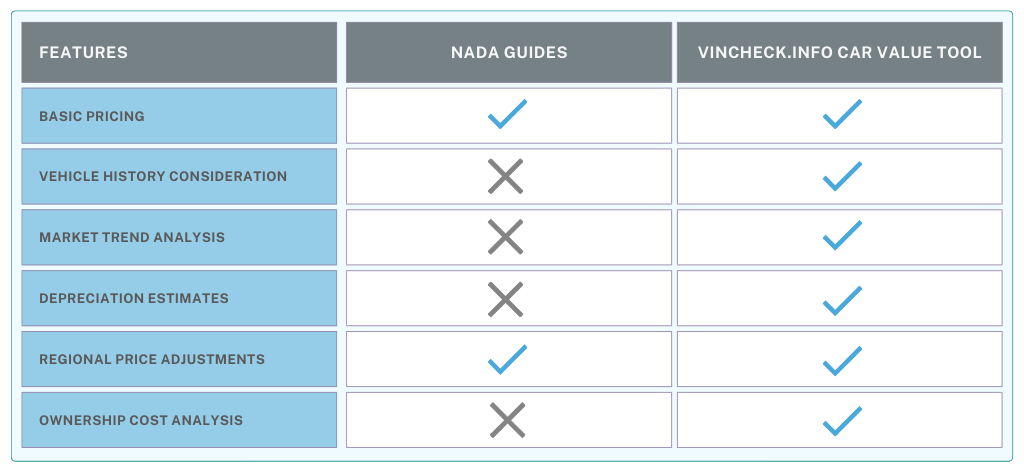
Essentially, NADA provides a common language for understanding vehicle value, facilitating fair transactions and minimizing disputes. While other valuation tools exist, NADA remains a respected and widely used resource.
Decoding Your VIN: The Key to Accurate Valuation
The Vehicle Identification Number (VIN) is a unique 17-character alphanumeric code assigned to every motor vehicle. Think of it as the vehicle's fingerprint. This code contains vital information about the vehicle's origin, specifications, and manufacturing details.
Here's a breakdown of what a VIN typically reveals:

- World Manufacturer Identifier (WMI): The first three characters identify the vehicle's manufacturer and country of origin.
- Vehicle Descriptor Section (VDS): Characters 4-9 describe the vehicle's make, model, body style, engine type, and other specifications.
- Vehicle Identifier Section (VIS): Characters 10-17 are unique to the specific vehicle and include the model year, assembly plant, and a sequential production number.

Why is your VIN important for NADA Value?
Using your VIN with NADA provides a significantly more accurate valuation than simply selecting the make, model, and year. Here's why:
- Precise Trim Level Identification: The VIN allows you to pinpoint the exact trim level of your vehicle, which can drastically affect its value. For example, a base model sedan will have a different value than a fully loaded version with premium features.
- Detailed Specifications: The VIN helps identify specific features and options that were factory-installed, allowing NADA to account for them in the valuation.
- Avoiding Errors: Manually selecting the make, model, and year can lead to errors, especially with uncommon vehicles or those with multiple trim options. The VIN eliminates this risk.
- Market Specific Adjustments: NADA values can be adjusted based on regional market conditions. The VIN helps pinpoint the location where the vehicle was initially sold, enabling more accurate regional adjustments.
How to Find Your NADA Value Using Your VIN: A Step-by-Step Guide
- Locate Your VIN: Your VIN can be found in several places:
- On the driver's side dashboard, visible through the windshield.
- On the driver's side doorjamb.
- On your vehicle's registration and insurance documents.
- Access a NADA Valuation Tool: Visit the J.D. Power website (formerly NADAguides.com) or another reputable online valuation tool that utilizes NADA data.
- Enter Your VIN: Most tools will have a dedicated field for entering your VIN. Type it in carefully to avoid errors.
- Confirm Vehicle Details: The tool should automatically populate the vehicle's make, model, year, and trim level based on your VIN. Verify that the information is correct.
- Enter Mileage and Condition: Accurately input the vehicle's current mileage and select the appropriate condition rating (e.g., Excellent, Good, Fair, Poor). Be honest and realistic about the vehicle's condition, as this significantly impacts the valuation.
- Add Optional Equipment: The tool may prompt you to add any optional equipment or features that were not standard on your vehicle. Select these carefully to ensure an accurate valuation.
- View Your NADA Value: The tool will generate a range of values, typically including:
- Trade-In Value: What a dealer might offer you for the vehicle as a trade-in.
- Retail Value: What a dealer might ask for the vehicle if they were selling it.
- Private Party Value: What you might expect to get if selling the vehicle to a private buyer.
- Consider Regional Adjustments: Be aware that NADA values can vary based on your location. The tool may automatically adjust for regional differences, or you may need to research local market conditions separately.
Important Considerations and Potential Challenges
- Condition Assessment is Key: NADA values are based on specific condition ratings. Accurately assessing your vehicle's condition is crucial for an accurate valuation. Be objective and consider factors like mechanical condition, cosmetic flaws, and maintenance history.
- Market Fluctuations: Vehicle values can fluctuate due to market conditions, seasonal demand, and economic factors. NADA values are updated regularly, but they may not always reflect the most recent market changes.
- Rare or Modified Vehicles: NADA values may not be accurate for rare or heavily modified vehicles. In these cases, it's best to consult with a qualified appraiser.
- Website Access and Errors: Occasionally, the NADA website or valuation tools may experience technical issues or data errors. Double-check the information and consider using multiple sources for verification.
- Subjectivity: While NADA provides a standardized benchmark, vehicle valuation can still be somewhat subjective. Individual buyers and sellers may have different perceptions of value based on their needs and preferences.
Tips for Maximizing Your Vehicle's Value
- Maintain Regular Maintenance: Keep up with scheduled maintenance, such as oil changes, tune-ups, and tire rotations. A well-maintained vehicle will command a higher value.
- Keep Detailed Records: Maintain records of all maintenance and repairs. This documentation can demonstrate that the vehicle has been properly cared for.
- Address Minor Repairs: Fix any minor repairs, such as scratches, dents, or broken lights. Addressing these issues can improve the vehicle's appearance and increase its value.
- Clean and Detail the Vehicle: A clean and well-detailed vehicle will make a better impression on potential buyers.
- Gather Relevant Documentation: Collect all relevant documentation, such as the owner's manual, warranty information, and service records.
Table Price Containing all Complete Information about Nada+Value+Using+Vin+Number
| Feature/Aspect | Description | Importance | Where to Find Information |
|---|---|---|---|
| NADA Value | A vehicle valuation provided by J.D. Power Values (formerly NADAguides), based on extensive data analysis. Provides trade-in, retail, and private party values. | Establishes a benchmark for fair pricing, crucial for buying, selling, insurance, loans, and tax assessments. | J.D. Power website (jdpower.com), other online valuation tools that utilize NADA data. |
| VIN (Vehicle Identification Number) | A unique 17-character alphanumeric code assigned to every vehicle, containing information about the vehicle's manufacturer, specifications, and production details. | Allows for precise trim level identification, detailed specifications, avoids errors in manual selection, and enables market-specific adjustments. | Driver's side dashboard (visible through windshield), driver's side doorjamb, vehicle registration and insurance documents. |
| Finding Your VIN | Locate the 17-character VIN on the vehicle or relevant documents. | Essential for accurate NADA value retrieval. | As mentioned above (Driver's side dashboard, etc.) |
| Accessing NADA Tool | Visit the J.D. Power website or a reputable online valuation tool. | Required to input the VIN and retrieve the NADA value. | J.D. Power website (jdpower.com), other online valuation tools (e.g., Kelley Blue Book often integrates NADA data). |
| Entering VIN | Input the VIN into the designated field on the valuation tool. | The first step in retrieving vehicle-specific NADA values. | On the valuation tool's input field. |
| Confirming Details | Verify that the vehicle details (make, model, year, trim) are correct. | Ensures the valuation is based on the correct vehicle specifications. | The vehicle details displayed after entering the VIN. |
| Mileage & Condition | Enter the vehicle's current mileage and select the appropriate condition rating (Excellent, Good, Fair, Poor). | Mileage and condition are major factors influencing vehicle value. Accurate input is crucial. | Your odometer reading, visual inspection of the vehicle's condition. |
| Optional Equipment | Add any optional equipment or features that were not standard. | Optional equipment adds value to the vehicle. | Vehicle invoice, window sticker, or by checking the vehicle's features. |
| Viewing NADA Value | The tool generates a range of values: Trade-in, Retail, Private Party. | Provides a range of potential values depending on the type of transaction. | Displayed on the valuation tool's results page. |
| Regional Adjustments | Consider regional market conditions that may affect the value. | Vehicle values can vary by location. | Researching local market conditions, comparing prices of similar vehicles in your area. |
| Maintenance Records | Keep detailed records of all maintenance and repairs. | Demonstrates that the vehicle has been properly cared for and increases its value. | Your personal records, receipts from service providers. |
| Vehicle Condition | Assess the vehicle's overall condition (mechanical, cosmetic, maintenance). | Critical for determining the appropriate condition rating when using NADA. | Thorough visual inspection, mechanical inspection by a qualified mechanic. |
Frequently Asked Questions (FAQ)
Q: Is NADA value the same as Kelley Blue Book (KBB) value?
A: No, while both NADA and KBB are reputable sources for vehicle valuation, they use different methodologies and data sources. They may provide slightly different values for the same vehicle. It's best to consult both resources and consider them as a range of potential values.
Q: How often are NADA values updated?
A: NADA values are updated regularly, typically on a monthly basis, to reflect market fluctuations and changing conditions.
Q: Can I get a NADA value for a classic or antique car?
A: NADA provides valuations for a wide range of vehicles, including some classic and antique cars. However, for highly specialized or rare vehicles, it's best to consult with a professional appraiser who specializes in classic car valuations.
Q: What if my vehicle has aftermarket modifications?
A: Aftermarket modifications can affect a vehicle's value, but the impact can vary depending on the type of modification and the buyer's preferences. NADA may not accurately reflect the value of heavily modified vehicles. Consider consulting with a qualified appraiser who can assess the impact of the modifications.
Q: The NADA value seems too high/low. What should I do?
A: If the NADA value seems inconsistent with your expectations, double-check that you've entered all the information correctly, including the VIN, mileage, condition, and optional equipment. Also, consider researching local market conditions and comparing prices of similar vehicles in your area.
Q: Can I use NADA value to negotiate with a dealer?
A: Yes, NADA value provides a valuable starting point for negotiations with a dealer. Be prepared to present your research and justify your offer based on the vehicle's condition and market conditions.
Conclusion
Understanding NADA values and leveraging your VIN number are essential tools for anyone involved in buying, selling, or owning a vehicle. By accurately identifying your vehicle's specifications and assessing its condition, you can obtain a more reliable valuation and make informed decisions. While NADA provides a valuable benchmark, remember to consider other factors, such as market conditions and individual preferences, to arrive at a fair and accurate assessment of your vehicle's worth. Utilizing these tools empowers you to navigate the complex world of vehicle valuation with confidence.

